



Glossary
Definitions surrounding microbiome health, including peptide, absorption, microbiome, postbiotics, probiotics, fermentation, bioavailability, and more.
Glossary
Understand the language behind microbiome health, fermentation, and how nutrients are absorbed and used in the body.
Fable Core
The process of taking nutrients from the foods and supplements you consume into your bloodstream so your body can use them. Fable focuses on improving this through naturally small, fermented peptides that are easier for the body to absorb.
A measure of how much of a nutrient your body can absorb and use. Higher bioavailability means more efficient nutrient utilization. Fermentation helps increase bioavailability by breaking nutrients down into smaller, more usable forms.
The ecosystem of trillions of microorganisms living in your gut that influence digestion, immunity, metabolism, and mood.
The community of trillions of bacteria and microorganisms living in your gut. The gut microbiome plays a key role in digestion, immunity, metabolism, and overall health. Fable is designed to support the microbiome through prebiotics and postbiotics.
How many beneficial nutrients are present in a serving of food or supplement. Fermentation naturally increases the nutrient density of soy by generating peptides, vitamins, and other compounds.
Ingredients & Compounds
Naturally occurring nutrients found in fermented foods and plants that support various functions in the body. In Fable, this includes polyphenols, B vitamins, isoflavones, polysaccharides, and spermidine.
Beneficial compounds produced during fermentation, including enzymes, short-chain fatty acids, and metabolites. Postbiotics support gut health, digestion, and immune function without needing live bacteria.
Natural antioxidants found in plants and enhanced through fermentation. They help support cellular protection, metabolic health, and overall longevity.uat hendrerit ligula, nec efficitur magna.
Complex carbohydrates that act as prebiotics, feeding beneficial gut bacteria. They help support microbiome balance and digestive health.
A naturally occurring compound produced during fermentation that supports cellular renewal and healthy aging processes.
Plant compounds found in soy with antioxidant and anti-inflammatory properties. Fermentation enhances their availability, making them easier for your body to use.
A group of essential vitamins produced during fermentation, including B1, B2, B6, B12, folate, and biotin. They play a key role in energy production, metabolism, and cellular function.
Fermentation Process
A metabolic process in which microorganisms such as bacteria, yeast, or fungi convert organic compounds into simpler molecules under controlled conditions. Microbial fermentation breaks down proteins and carbohydrates into smaller, more bioavailable compounds including peptides, organic acids, and metabolites.
This process has been shown to increase nutrient digestibility, enhance bioavailability, and generate bioactive compounds, such as postbiotics that support gut microbiome function and metabolic health.
A natural transformation process where microorganisms break down food into smaller, more bioavailable nutrients. Fable uses controlled fermentation to create biome peptides, postbiotics, and enhanced nutrient density.
Fermented Soy: Whole soybeans that have been transformed by fermentation. This process develops peptides, prebiotics, postbiotics, and naturally occurring nutrients with high bioavailability.
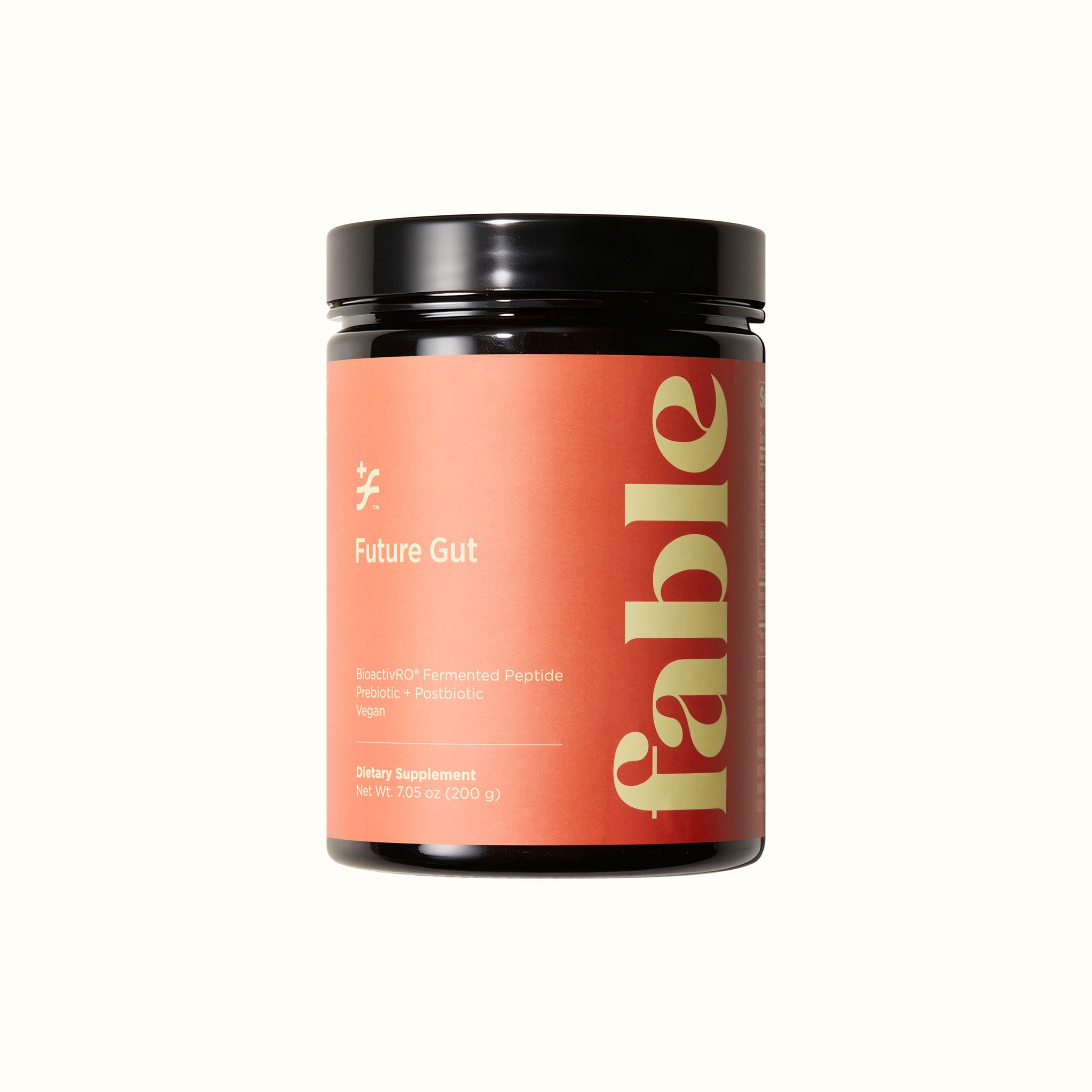
Fable’s proprietary fermented soy biome peptide, created through a 72-hour fermentation process using live cultures.
Peptides
A peptide created through fermentation that interacts with your gut microbiome.
Small peptides created during fermentation. Their size makes them easier to absorb quickly and more gentle on digestion compared to larger protein molecules.